Leak Detection in Mid-Wilshire

Leak Detection in Mid-Wilshire: planning range $275–$3 600, typical timeline 5–10 business days from signed scope to install start. Leak locating usually starts as diagnostic work; pipe repair, wall opening, repiping, water-heater replacement, or gas-line work may require permits depending on final scope. Call +1 (213) 277-6575 for a same-day comfort assessment.

★★★★★ 5.0 · 30+ verified reviews · Westside Los Angeles install desk

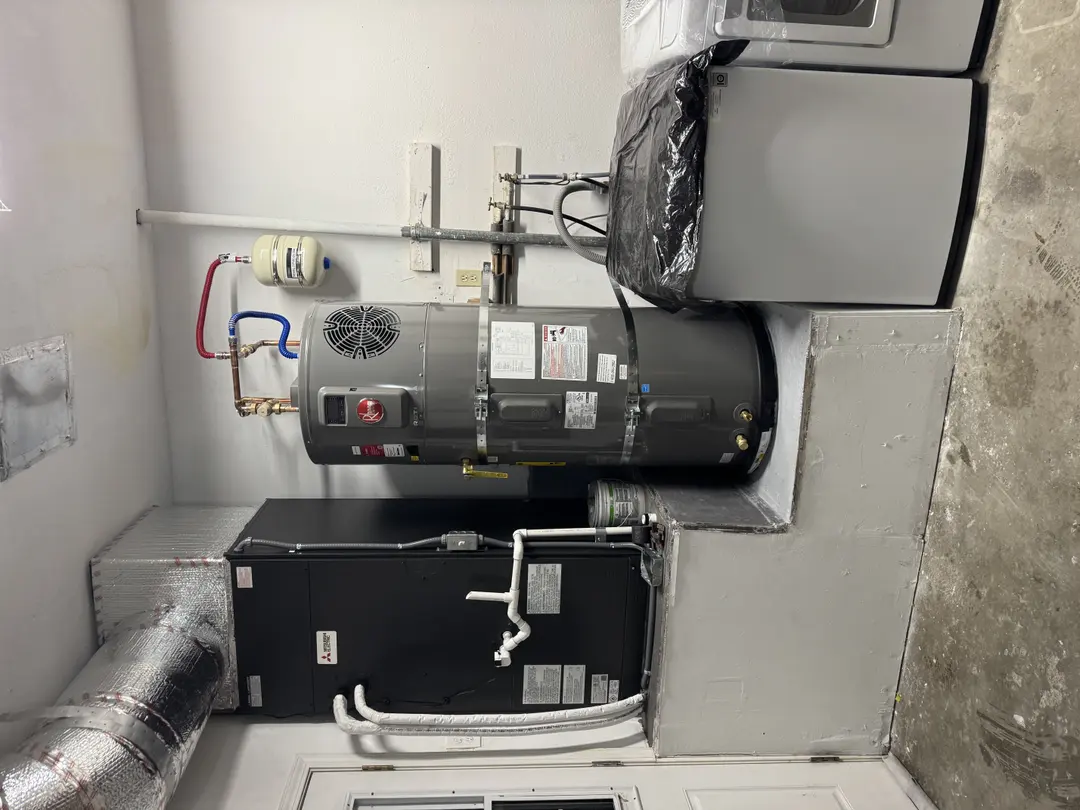
Rheem water heater installed beside a Mitsubishi Electric air handler in a clean white-walled mechanical room with PVC condensate piping and dedicated drain pan

From the project ledger: Carthay Circle: slab leak under the dining room, 24-inch concrete cut

Recent leak detection project for context — what we measured, what we installed, and what the homeowner saw afterwards.

2025-08-12 → 2025-08-19

Carthay Circle: slab leak under the dining room, 24-inch concrete cut

Hot water bill doubled. Acoustic detection put the leak under a quarter-sawn oak dining floor. Surgical 24-inch concrete cut, copper section replaced.

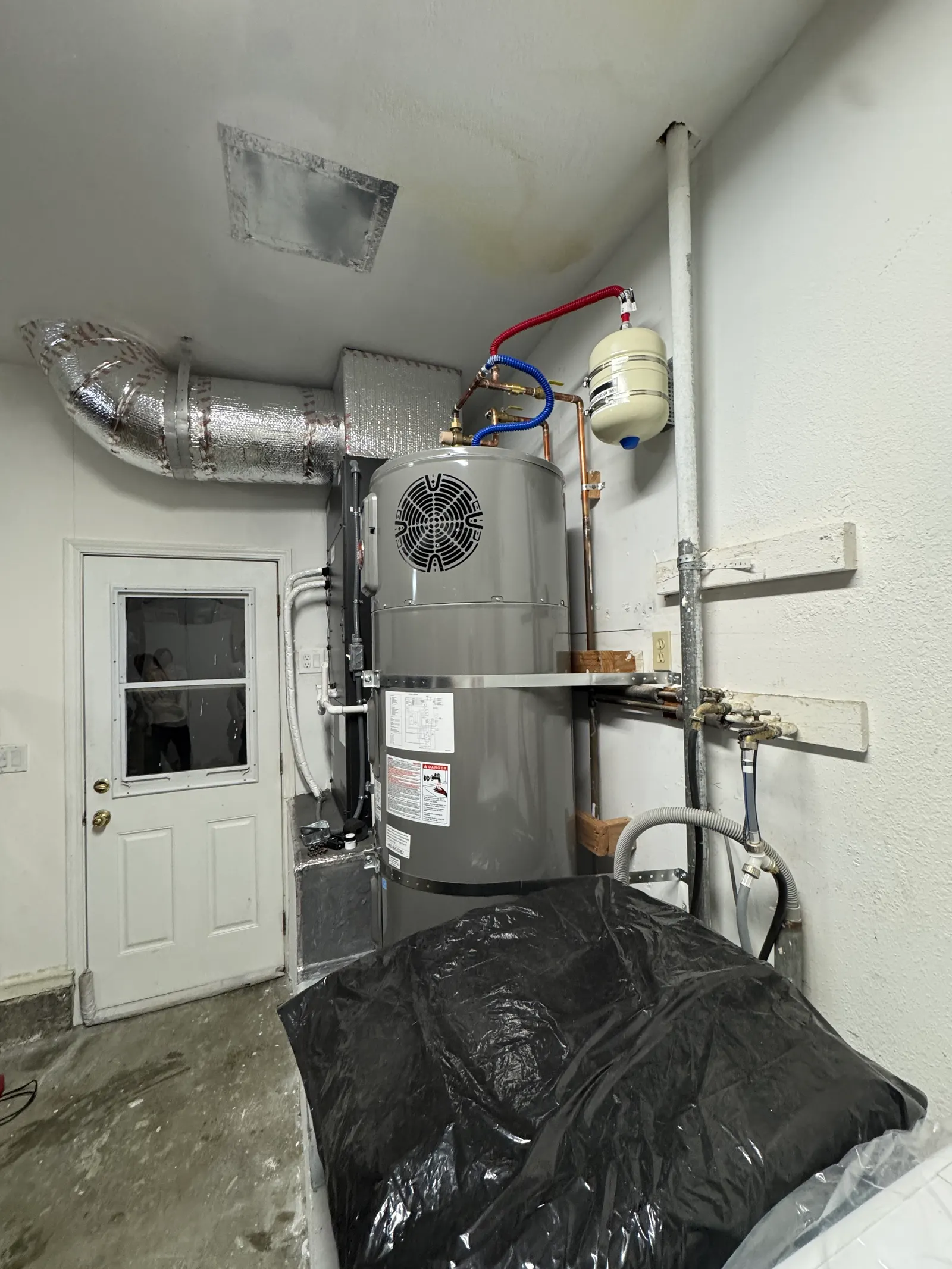
Top view of a newly installed Rheem electric water heater with copper trim, expansion tank, and seismic strapping in a West Los Angeles utility room
Property
1932 Spanish revival (1932)
Removed
Failed copper section in slab (1932 original Type-M)
Installed
Type-L copper section + dielectric unions + slab patch
Permit
LADBS plumbing permit (slab repair), inspection cleared 2025-08-22
Cost
$5 800–$6 800
  • Acoustic detection isolated leak to within 18 inches
  • Floor refinisher engaged before the cut to plan grain match
  • Slab patched with high-strength non-shrink grout
  • Pressure tested at 100 PSI for 60 minutes before close-out

Measurements

Cut Size
24 in × 18 in
Pressure Test
100 PSI / 60 min, no drop
Leak Recovery P S I
76 → 80 (post-fix)

Field note: Slab leaks reward small cuts. A 4x4 hole + acoustic detection is dramatically cheaper than a re-route or a partial repipe.

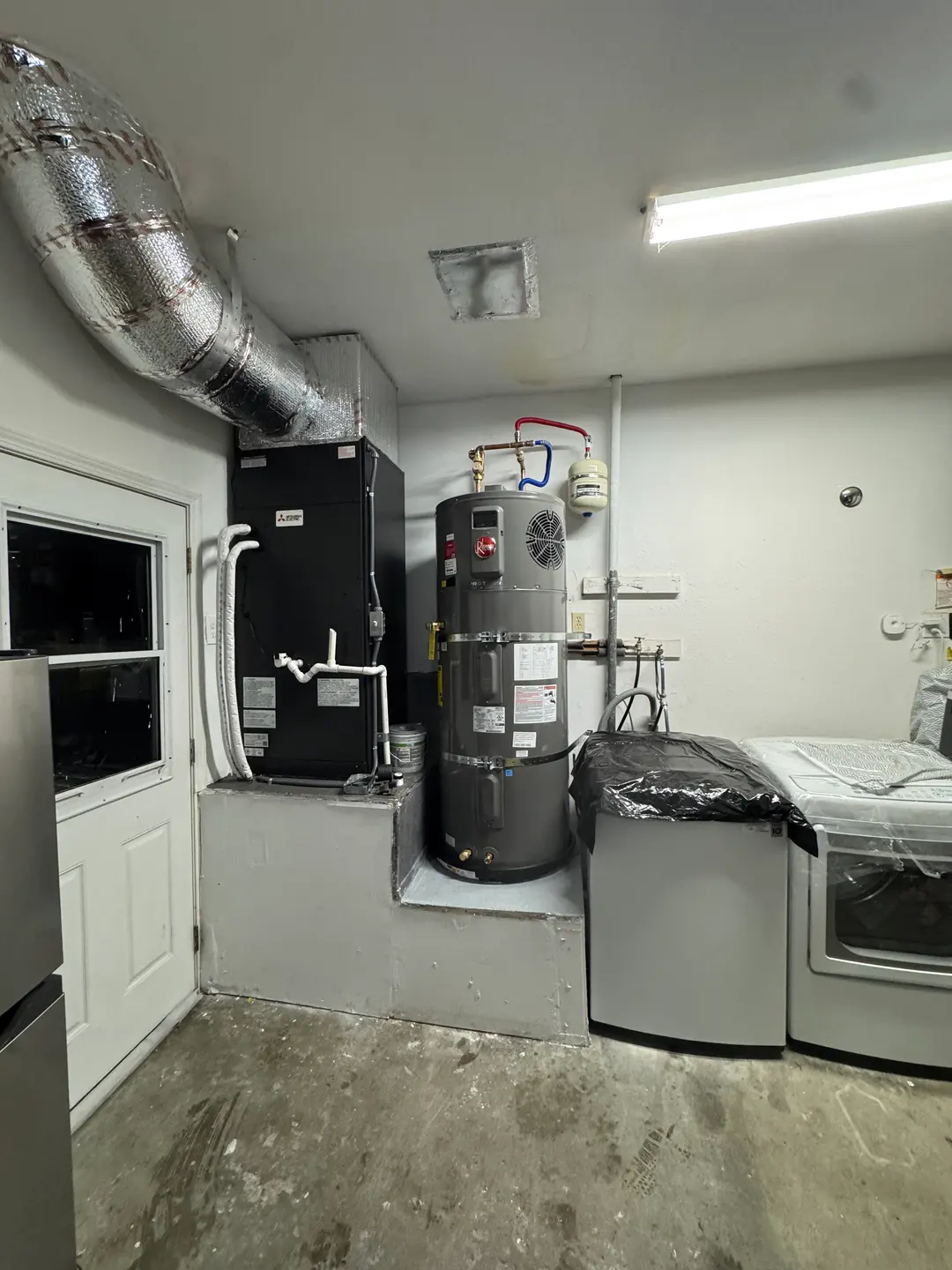
Rheem residential water heater installed alongside a Mitsubishi Electric air handler in a West Los Angeles garage utility room with insulated supply duct

Booking a leak detection inspection in Mid-Wilshire

Most leak detection bids in Mid-Wilshire miss what the home is asking for. Plumbing work on apartment buildings and condos requires roof access, attention to rooftop HVAC failures, and a permit pathway that respects ladbs mechanical. Our scope is built for that.

Three details change plumbing pricing in Mid-Wilshire more than equipment tier: loading zones, old panels, and urban heat-island afternoons. Leak Detection that ignores any one of those tends to come back as a callback within 18 months. We surface those before signing.

Mid-Wilshire field profile

What the dispatch desk needs to know about Mid-Wilshire: it is a central LA retrofit corridor with apartments, offices, older homes, and high mechanical complexity. Anchors are Mid-Wilshire, Wilshire Boulevard, La Brea Avenue. Building stock is apartment buildings, condos, older homes. The two access constraints that change the truck loadout are loading zones and roof access. The two seasonal patterns that change urgency are urban heat-island afternoons and older apartment airflow complaints.

What we measure and photograph

Three things can blow up a leak detection budget in Mid-Wilshire: undersized return air, the wrong acoustic tools, and unplanned electrical work when the panel turns out to be 100 amps. We catch those at the photo review, not on day two of the install.

What we do not do: keep resetting breakers on a tripping circuit, run water into a backed-up drain, operate HVAC equipment that smells hot or is spilling water, or quote replacement before a real diagnostic. Those shortcuts turn small repairs into bigger damage.

Common findings on properties of this age

For leak detection in Mid-Wilshire, the bias should be repair when the equipment is under ten years old, the failure is mechanical (not refrigerant or heat-exchanger), and the scope is contained. Replacement gets the nod when repeat callbacks, refrigerant transition, or electrical contact change the math.

How the report supports next-step decisions

Leak locating usually starts as diagnostic work; pipe repair, wall opening, repiping, water-heater replacement, or gas-line work may require permits depending on final scope. For this market specifically: LADBS mechanical, electrical, plumbing, and inspection context often matters for heat pumps, condensers, panel work, EV chargers, water heaters, ductless line sets, rooftop/package equipment, multifamily common areas, and remodel-connected MEP work; nearby Beverly Hills, Culver City, and West Hollywood addresses should be verified separately.

The replacement scope opens with photos and a site walk. We measure static pressure, photograph the panel main breaker, list comfort complaints by room, and confirm whether HOA, estate-manager, or jurisdictional review is going to be in the project critical path. Inspection-day documentation is prepared from day one — AHRI certificate, equipment serial numbers, electrical disconnect routing, condensate plan.

Cost and turnaround

Single most useful prep for a Mid-Wilshire appointment: a 90-second video walkthrough of the equipment, the panel, and the affected room. Audio is fine. Send it through the booking link or text the photos to +1 (213) 277-6575.
What HVAC, electrical, and plumbing work actually looks like in the Pico-Robertson corridor

The Pico-Robertson cluster — covering Beverlywood, Beverly Grove, Carthay, Fairfax, Mid-Wilshire, Century City, and the boulevards that connect them — is the highest-volume retrofit market in our service radius. The buildings tell the story.

Around Olympic and Robertson the housing stock skews 1925–1968: courtyard apartments where the original cast-iron drains have outlived two boiler systems, duplexes from the second postwar wave with 100-amp ITE Bulldog Pushmatic panels still wired to a single AC, single-family bungalows that absorbed three remodels and ended up with three different duct philosophies layered on top of each other. None of that is a generic HVAC problem. It is a specific Westside problem with specific Westside answers.

The boulevards complicate dispatch in ways that don't show up on a service map. Olympic west of La Cienega between 7am and 10am is unusable for delivery trucks. Pico east of Robertson narrows after the high school lets out. We schedule equipment drops on these corridors for the 10am–2pm window because that's when curb access exists. A 7:30am install start on Olympic costs the customer a half-day of waiting for the truck. We learned that the hard way.

Permit work in this cluster is almost always LADBS — but "almost" is doing a lot of lifting. Crossing into Beverly Hills happens at La Cienega, sometimes mid-block on smaller streets between Olympic and Wilshire. Two doors apart can mean two different building departments, two different inspection schedules, and two different fees. We verify by parcel before quoting because guessing wrong adds three weeks. The Beverly Hills permit counter is faster but stricter on noise documentation; LADBS is slower but more predictable on mechanical replacement scope.

The microclimate matters here even though it sounds counterintuitive for a flat urban corridor. The afternoon heat-island around La Cienega and Beverly is real — temperatures 6–8°F above coastal Santa Monica on a typical August afternoon. Combined with older buildings whose duct insulation has shed and whose attic ventilation predates anyone's current thinking, you get systems that run continuously from 1pm to 9pm and still don't satisfy the upstairs setpoint. Our standard intervention here is not bigger equipment. It is duct sealing, return-air rebuild, and a properly sized variable-speed unit that can ride the load instead of cycling through it.

  • Olympic delivery window: 10am–2pm only
  • Beverly Hills/LA City boundary is parcel-specific, not street-specific
  • Pre-1975 panel + post-2010 remodel = panel review before HVAC quote
  • Cast-iron drain camera inspection priced into every plumbing scope

Cost drivers in Mid-Wilshire

Mid-Wilshire pricing depends on what is hidden as much as what is visible. The cost-driver table below names each variable and the local context that changes it.

DriverWhy it matters for leak detectionHow to reduce friction
Hidden pipe location Hidden pipe location changes labor, parts, diagnostic time, safety steps, or inspection needs. In Mid-Wilshire, it is influenced by loading zones and old panels. Send photos, confirm access, and note coordination needs in your booking note.
Moisture mapping Moisture mapping changes labor, parts, diagnostic time, safety steps, or inspection needs. In Mid-Wilshire, it is influenced by roof access and rooftop HVAC failures. Send photos, confirm access, and note coordination needs in your booking note.
Wall or slab access Wall or slab access changes labor, parts, diagnostic time, safety steps, or inspection needs. In Mid-Wilshire, it is influenced by property-manager approvals and shared plumbing stacks. Send photos, confirm access, and note coordination needs in your booking note.
Acoustic tools Acoustic tools changes labor, parts, diagnostic time, safety steps, or inspection needs. In Mid-Wilshire, it is influenced by tenant notifications and water heater closets. Send photos, confirm access, and note coordination needs in your booking note.
Repair complexity Repair complexity changes labor, parts, diagnostic time, safety steps, or inspection needs. In Mid-Wilshire, it is influenced by panel-room coordination and drain backups. Send photos, confirm access, and note coordination needs in your booking note.
Finish protection Finish protection changes labor, parts, diagnostic time, safety steps, or inspection needs. In Mid-Wilshire, it is influenced by loading zones and old panels. Send photos, confirm access, and note coordination needs in your booking note.

Send details for leak detection in Mid-Wilshire.

Add photos, access notes, urgency, and whether drain backups or another home-system issue is involved.

Related links for this decision

Water Heater Replacement

tank leaks, tankless upgrades, heat pump water heaters, venting, seismic support, pans and drains, garage placement, and inspection-ready replacement.

water heater replacement Mid-Wilshire

Drain Cleaning

slow drains, grease, roots, cleanout access, camera inspection decisions, hillside sewer routes, and repeat backups.

Local scope for Mid-Wilshire

Sewer Line Inspection

camera inspection, roots, clay laterals, hillside access, private versus public responsibility, repair planning, and trenchless options.

sewer line inspection Mid-Wilshire

Pico-Robertson

GMB-adjacent Westside retrofit market centered on Olympic, Pico, Robertson, and Beverly Hills edge properties. Local concern: old wall furnaces and window units.

What changes in Pico-Robertson

South Robertson

dense Westside corridor with apartments, duplexes, storefronts, and Beverly Hills/Culver City edge routing. Local concern: old electrical service.

How we approach this in South Robertson

Beverlywood

Westside residential market with older homes, premium remodels, and strong HVAC replacement intent. Local concern: aging ducts.

Beverlywood leak detection

Crestview

compact residential pocket near Pico-Robertson where older homes and multifamily service overlap. Local concern: old wiring.

leak detection Crestview

Century City

premium condo, office-edge, and residential market where access and documentation matter as much as equipment. Local concern: shared systems.

leak detection in Century City

Robertson Corridor

commercial-residential service spine where local routing, parking, and older mixed-use systems matter. Local concern: old panels.

Robertson Corridor leak detection

Homeowner Questions

Short answers for the questions that usually decide whether this is a repair, replacement, inspection, or emergency visit.

How fast should I book leak detection in Mid-Wilshire?

Book quickly if the symptom involves mold growth or electrical contact. In Mid-Wilshire, urgency rises when shared plumbing stacks could affect safety, finished interiors, electrical equipment, or shutoff timing. Active leaks, no-cooling during heat, gas odor, burning electrical smell, or repeated breaker trips are emergency-tier — call +1 (213) 277-6575.

What should I prepare for leak detection before the technician arrives?

Send photos of shut off water if active, photograph stains and meter movement, protect belongings. For Mid-Wilshire, also confirm property-manager approvals and tenant notifications.

Do you handle permits and inspections for leak detection in Mid-Wilshire?

Yes. Leak locating usually starts as diagnostic work; pipe repair, wall opening, repiping, water-heater replacement, or gas-line work may require permits depending on final scope. LADBS mechanical, electrical, plumbing, and inspection context often matters for heat pumps, condensers, panel work, EV chargers, water heaters, ductless line sets, rooftop/package equipment, multifamily common areas, and remodel-connected MEP work; nearby Beverly Hills, Culver City, and West Hollywood addresses should be verified separately AHRI matched-system documentation, condensate routing review, electrical disconnect verification, and final inspection scheduling are included in the replacement scope.

How quickly can a Mid-Wilshire leak detection appointment be scheduled?

Standard Mid-Wilshire bookings open within 48–72 hours; emergency dispatch for active leaks, no-cooling, or gas/electrical safety symptoms is typically on-site within 60–120 minutes.

Recent leak detection reviews from Westside Los Angeles homeowners

These visible review bodies are kept in exact parity with the JSON-LD review schema on this page.

Eric H. Pico-Robertson

We had two upstairs bedrooms that ran ten degrees hotter than the rest of the duplex on summer afternoons, and our existing 2008 condenser was running constantly. The team came out, did a real Manual J on every room, and instead of pushing a 5-ton replacement they recommended a 3-zone Mitsubishi MXZ system with a small ducted unit for the main floor and two wall cassettes upstairs. The line-set route through the wall cavity was thoughtful and didn't touch any exterior plaster. They pulled a mechanical permit through LADBS, scheduled the inspector, and were done with everything in five days. Two summers in, the upstairs is now within two degrees of the main floor, and our LADWP bill in August dropped from around $480 to $310.

Rachel S. Marquez Bel-Air

Replacing a 22-year-old Carrier system in an estate where the air handler was buried behind a finished hallway ceiling was not going to be a one-day job. Sofia's team mapped the duct routes with a borescope first, redesigned the return air, and moved the air handler to the attic over the garage so the hallway no longer had to be opened. Floor protection was professional — Ram Board, plastic tunnels, the works. Trane XV20i runs almost silent on the patio side, and the new variable-speed staging means the upstairs guest rooms finally cool. Permit and inspection went through Beverly Hills with no friction because they had the AHRI matched-system documentation ready.

Jaime L. Malibu Colony

Our previous condenser failed at year six because nobody flagged the salt-air problem when it was installed. This time the install desk specifically recommended the Carrier 24VNA6 with the seacoast package and put it on the leeward side of the property with a stainless mounting bracket. They also added a quarterly coil-rinse maintenance plan because PCH dust plus marine moisture is brutal on equipment. Three winter storm seasons in and the unit looks like it did on day one. They also coordinated the City of Malibu permit form, which was its own small adventure.

Denise Park Trousdale Estates

Mid-century modern flat roof, glass walls everywhere, and the architect was very specific that we could not see the new condenser from the pool. The team proposed a Daikin Fit side-discharge unit hidden behind a custom screen wall they coordinated with our landscape designer. Sound at the property line measures 49 dB which is below the city limit. They commissioned the system with manometer readings, sent a written report with static pressure across the coil, and registered the warranty. This is what an HVAC install at this level should look like.

Design Call